
Part 6 of a 6-part series on understanding your net proceeds as a seller — written for absentee owners weighing a short sale.
This series opened with a simple correction: your online estimate isn’t your payout. Part 2 broke down what’s actually on a seller net sheet, line by line. Part 3 asked the question every seller really wants answered: what will I actually walk away with? Then Part 4 turned to FSBO sellers and the number no automated valuation tool will ever show them. Part 5 turned to expired listing sellers and the net sheet their last agent never showed them. This final part turns to a harder question for absentee owners: does a sale even clear what’s owed?
What “Short Sale” Actually Means for Absentee Owners
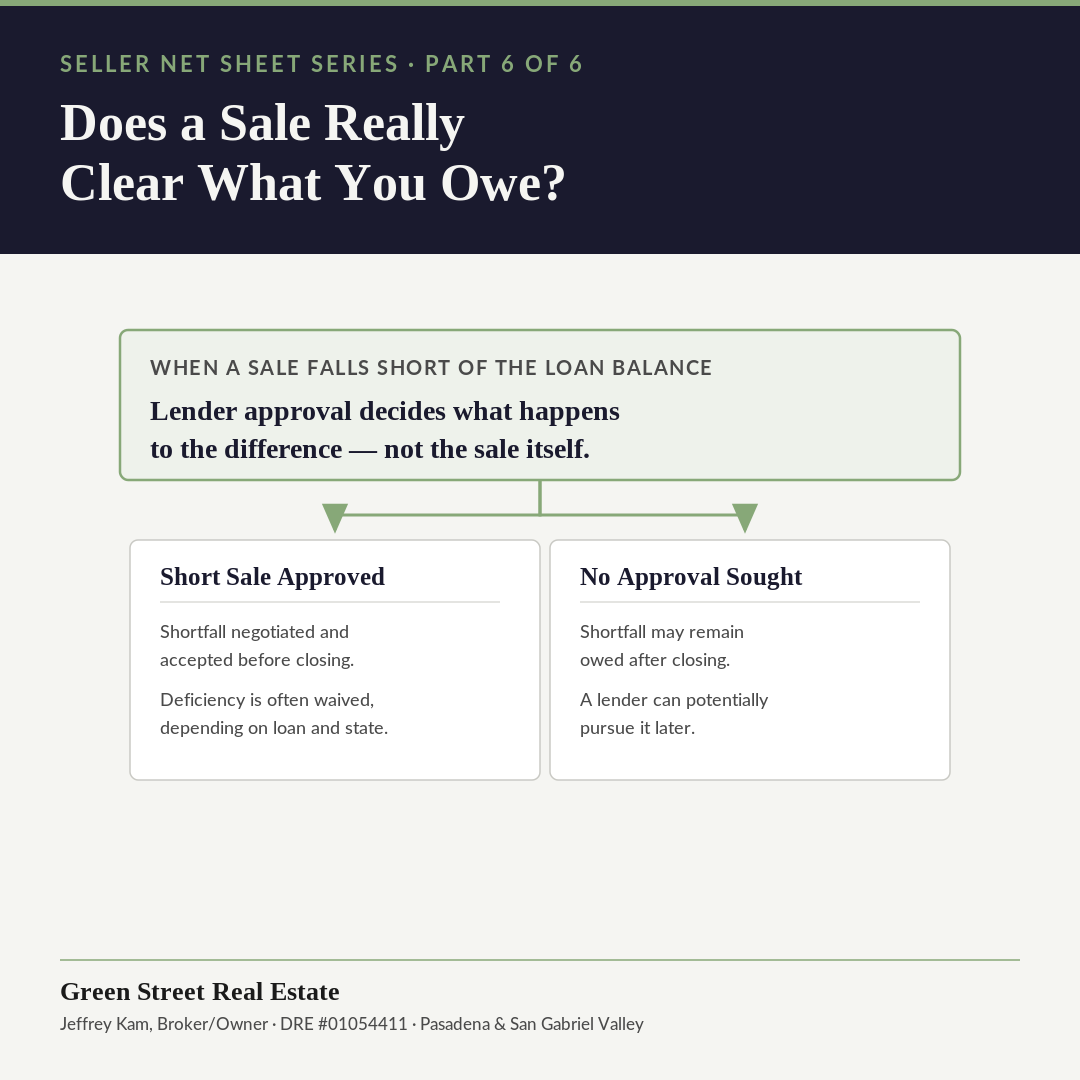
A short sale happens when a home sells for less than what’s owed on the mortgage. For absentee owners, that gap can be wider than expected. Vacancy, deferred maintenance, and time on the market all add up. The sale itself doesn’t erase that difference automatically. Whether the shortfall gets forgiven depends on the loan type and the lender’s approval. State law plays a role too. Some loans carry more protection than others. A second mortgage or home equity line often carries less protection than the original purchase loan. None of this gets settled by the sale itself. It has to be negotiated and approved before closing, not assumed afterward.
Picture an owner who inherited a rental property with more debt against it than the home is worth. Selling seems like the obvious way out. But without the lender’s approval of a short sale, the seller could still owe the difference after closing. That detail belongs on the net sheet from the start, not discovered after the fact.
What the Net Sheet Looks Like When the Numbers Go Negative
A short sale net sheet works differently than a standard one. Instead of estimating what a seller walks away with, it estimates the shortfall. That’s the amount a lender is being asked to accept. That figure needs the full loan payoff, not just the balance on a recent statement. It also needs a realistic sale price, not a hopeful one. Overstating the price only delays the lender’s decision and extends how long the debt gets carried. Absentee owners weighing this path should also talk with a tax professional. Forgiven mortgage debt can sometimes count as taxable income, though exceptions may apply depending on the situation. A real estate attorney can clarify what protections apply to the specific loan and property involved. None of that replaces a clear net sheet. It just means the net sheet is only part of the picture.
This closes out the six-part series on seller net proceeds. The theme has stayed the same across every part: know the real number before deciding anything else. For absentee owners facing a short sale, that number takes more work to find. It also takes more care to act on. A confidential conversation is often the fastest way to get a clear answer.
Jeffrey Kam | Broker/Owner, Green Street Real Estate | DRE #01054411
Serving Pasadena and the San Gabriel Valley