
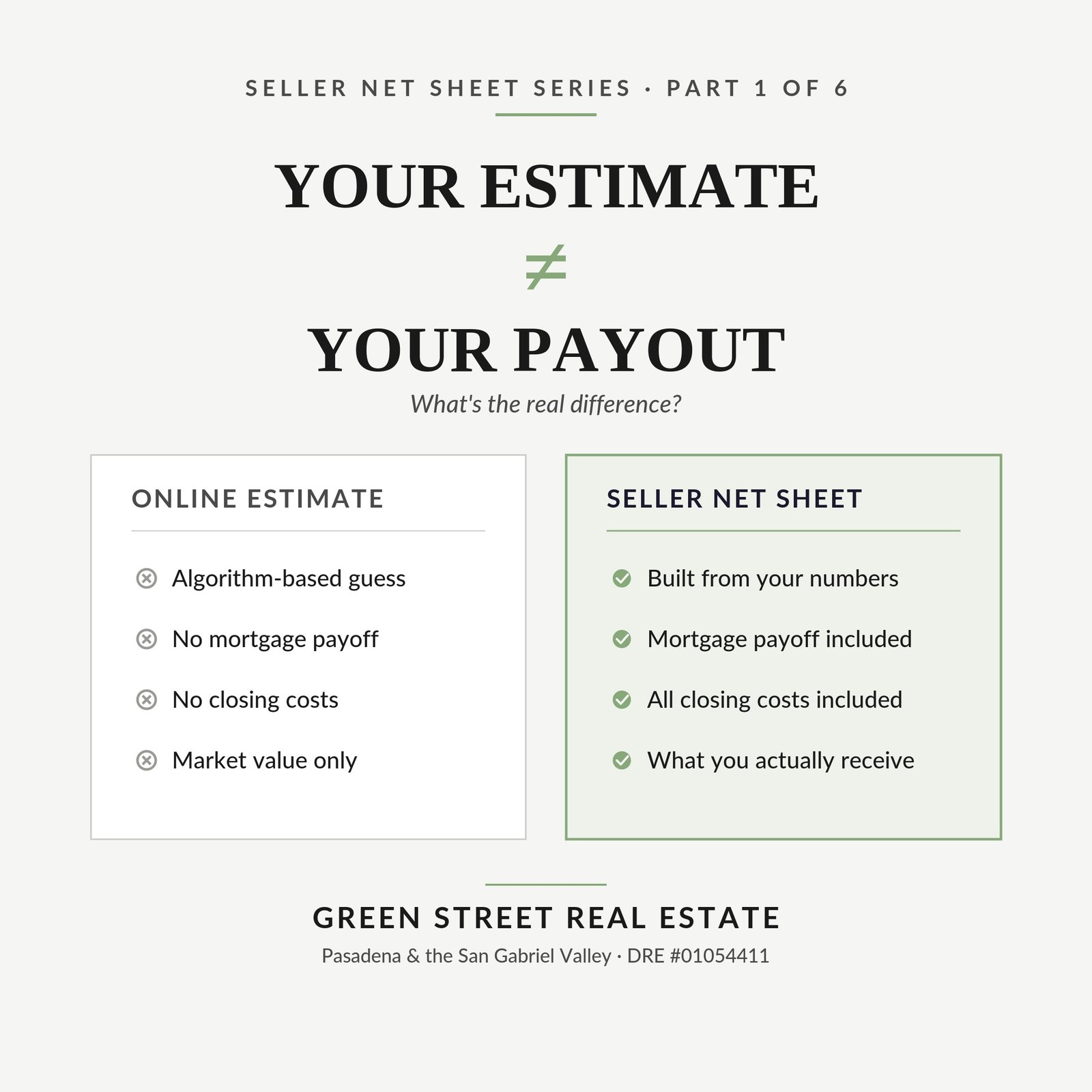
Series: Understanding the Seller Net Sheet (Part 1 of 6)
If you’ve looked up your property online, you’ve seen a number. Zillow calls it a Zestimate. Redfin has its own version. Every real estate portal has one, and it’s usually the first figure a homeowner fixates on when they start thinking about selling.
Here’s the problem: that number tells you what your home might be worth on the open market. It tells you nothing about what you’ll actually walk away with after the sale closes.
Those are two different questions, and confusing them leads to bad decisions — especially for owners who aren’t living in the property day to day, or who are weighing whether selling even makes sense in the first place.
Why the Gap Exists
An automated estimate is a market value guess, built from comparable sales and public data. It doesn’t know your loan balance, your interest rate, how far behind you might be on payments, whether you have a second mortgage or a lien, or what condition the property is actually in.
It also doesn’t account for the cost of the transaction itself. Selling a home isn’t free, and every dollar of those costs comes off the top before anything reaches you.
That’s what a seller net sheet is for.
What a Seller Net Sheet Actually Is
A net sheet is a line-by-line estimate of every cost associated with selling your property, subtracted from the expected sale price, to show what you’d actually receive at closing. It’s not a guess — it’s built from your specific numbers: your loan payoff, your property’s tax status, and the terms of the deal you’re considering.
What’s Included
A properly prepared net sheet typically accounts for:
- Estimated sale price — based on comparable sales and current market conditions, not an algorithm
- Mortgage payoff — including per diem interest, not just your last statement balance
- Second mortgages, HELOCs, or liens against the property
- Real estate commission
- Title and escrow fees
- County transfer tax (and city transfer tax, where applicable)
- Prorated property taxes through the closing date
- HOA dues or transfer fees, if applicable
- Negotiated repair credits or concessions
- Miscellaneous closing costs — recording fees, natural hazard disclosure reports, home warranty, and similar items
Add these up and subtract them from the sale price, and you get a realistic net figure — not a market estimate.
Why It Matters
For most sellers, the net sheet is a planning tool: it tells you what to expect so there are no surprises at the closing table.
For absentee owners, expired listings, and anyone facing a short sale or financial hardship, it’s more than that. It’s often the number that determines whether selling is even viable — whether a sale will pay off what’s owed, or whether other options need to be on the table. Making that decision off an online estimate instead of an actual net sheet is how sellers end up blindsided.
The Bottom Line
An online estimate is a starting point for a conversation. A net sheet is the answer. If you’re weighing a sale and want to know the real number — not the algorithm’s guess — that’s a conversation worth having before you list.
This is Part 1 of a series on the seller net sheet. Next: what actually goes on the net sheet, line by line.
Jeffrey Kam, MBA | Broker/Owner | Green Street Real Estate | DRE #01054411 | Serving Pasadena and the San Gabriel Valley |